
  • Pay Bill Now
  • Contact Us
  • Careers
  • SWIFT
  • Investors
  • Newsroom
  • FOIA

HRSD

Menu

  • About HRSD

    Hampton Roads sunset

    HRSD promises to treat wastewater and recover natural resources to protect public health and the environment.

    Who We Are

    We return treated effluent to nature while nurturing our delicate ecosystems and their inhabitants.

    • About Us
    • Awards
    • History

    Organization

    We employ talented people who take pride in doing their best for the environment

    • Chart
    • Commission
    • General Management
    • Senior Leadership

    Divisions

    • Communications
    • Engineering
    • Finance
    • Information Technology
    • Operations
    • Talent Management
    • Water Quality

    Quick Links

    • 2023 HRSD Climate Change Planning Study
    • Annual Comprehensive Financial Report
    • Budget
    • Capital Improvement Program (CIP)
    • Consumer Annual Report
    • HRSD Strategic Plan
    • Making Waves Blog
    • Rate Schedule
    • Wastewater Surveillance
  • Customers

    Residential

    • Pay or View Bill
    • Self-Service
    • Customer Service
    • FAQs

    Non-Residential

    • Customer Resources
    • P2 Awards
    • Report a Spill
    • FAQs
  • Doing Business with HRSD

    Work With Us

    • Bids and RFPs
    • Development Services
    • Procurement
    • Engineering
    • HRSD Industry Outreach
    • SWIFT Industry Outreach

    Technical Information

    • Design and Construction Standards
    • GIS Public Viewer
    • Record Drawings Requests
  • Initiatives and Programs

    Education

    • Boater Education
    • Classroom
    • HRSD's Approach to Managing PFAS
    • My Flush Counts
    • Schedule a Tour

    Research & Development

    • HRSD's Approach to Managing PFAS
    • Wastewater Surveillance

    Scholarships & Grants

    • HRSD Environmental Improvement Fund Grant
    • HRSD Scholarship
    • Voluntary Septic to Sewer Connection Program

    Working Together

    • askHRgreen.org
    • Chesapeake Oyster Alliance
    • EPA Consent Decree
    • Help 2 Others
    • Virginia Living Museum

    Local Government

    Since 1992 HRSD has provided municipal environmental services to Virginia government agencies, sharing technical expertise and resources. More than 50 agencies have benefited from environmental monitoring and analysis, training and consulting—all provided

    • Municipal Assistance Program
  • Home
 

Sanitary Sewer Overflows (SSOs) FAQs


The sanitary sewer system is a network of pipes that conveys used water from your bathroom and kitchen fixtures to the wastewater treatment plant. At the wastewater treatment plant, the used water is cleaned and treated and discharged into the area rivers and tributaries.
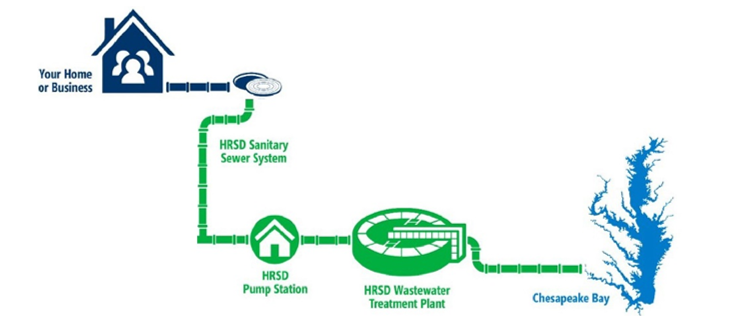
Sanitary Sewer System image


Stormwater systems are a network of pipes, ditches, and basins that collect stormwater or rainwater and route it to rivers, lakes, or oceans. The water from gutters and sumps from basements or crawl spaces should be routed to the stormwater system. Stormwater does not get treated at wastewater treatment plants.


Sanitary Sewer Overflows (SSOs) are the release of untreated wastewater into the environment which can cause public health risks, environmental damage, and financial consequences.


Sanitary Sewer Overflows (SSOs) can be caused by sanitary sewer pipe blockages, Fats, Oils and Grease (FOG) entering the sanitary sewer system, system malfunctions, excessive inflow and infiltration from rainwater or groundwater, or an overload on the sewer system during heavy rainfall events.


Inflow is rainwater that enters the sewer pipes through improper plumbing. Inflow overloads the sanitary sewer system and can cause sanitary sewer overflows. Disconnecting gutters from the sanitary sewer and pumping water from the basement or crawl space to the storm drain system helps to reduce the load on the sewer pipes which can prevent sanitary sewer overflows.

Infiltration is groundwater that enters the sanitary sewer system. Groundwater can enter the sewer pipes through a broken or missing cleanout cap, roots from plants or trees growing into the pipe, and cracks in the sewer pipe. To reduce infiltration, replace missing or broken cleanout caps and have sewer pipes with cracks or roots growing into them repaired. 


Blockages can be caused by roots growing into the pipes, putting fats, oil, and grease (FOG) down the drain. Flushing wipes or anything other than pee, poo, and toilet paper into the sanitary sewer system can also cause blockages.

Roots growing into sewer pipes can occur because tree roots are naturally drawn to moisture and nutrients found in sewer pipes. Roots in sewer pipes can lead to clogs and backups.

If FOG enters the sewer system, it solidifies as it cools down and sticks to the pipes, which can reduce pipe capacity and cause an SSO. The amount of FOG that is put into the sanitary sewer system can be reduced by scraping excess food into the trash before cleaning dishes, wiping down greasy dishes with a paper towel before washing, and collecting oil in a container and disposing of it in the trash can.

Wipes (even if the label says they are flushable) should not be flushed. Wipes do not break down like toilet paper does and can block the sewer pipe and cause a sanitary sewer overflow.


Yes, it is illegal to discharge stormwater to the sanitary sewer system. This includes missing or damaged cleanout caps from your sewer lateral, runoff from improperly connected house gutters, and improperly connected basement/crawl space sump pumps.

Summary

  • Facebook
  • Twitter
  • YouTube

Our Promise

We promise to treat wastewater and recover natural resources to protect public health and the environment.

Our Vision

Our communities will have clean waterways and reliable water resources for generations to come.

Privacy Policy

Main Office

1434 Air Rail Avenue
Virginia Beach, VA 23455

— or —

P.O. Box 5911
Virginia Beach, VA 23471-0911

Phone

757.460.2261

  • Billing and Payments Billing and Payments
  • Career Opportunities Career Opportunities
  • Construction Status Construction Status
  • Customer Service Customer Service
  • HRSD News and Updates HRSD News and Updates
  • Learn More Learn More

Awards + Recognition

Governor's Environmental Excellence
2025 Gold Award for James River Land Improvement — Trails Phase 1