
-
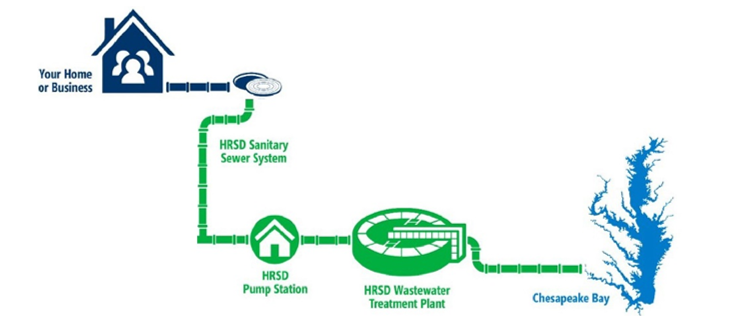
The sanitary sewer system is a network of pipes that conveys used water from your bathroom and kitchen fixtures to the wastewater treatment plant. At the wastewater treatment plant, the used water is cleaned and treated and discharged into the area rivers and tributaries.
-
Stormwater systems are a network of pipes, ditches, and basins that collect stormwater or rainwater and route it to rivers, lakes, or oceans. The water from gutters and sumps from basements or crawl spaces should be routed to the stormwater system. Stormwater does not get treated at wastewater treatment plants.
-
Sanitary Sewer Overflows (SSOs) are the release of untreated wastewater into the environment which can cause public health risks, environmental damage, and financial consequences.
-
Sanitary Sewer Overflows (SSOs) can be caused by sanitary sewer pipe blockages, Fats, Oils and Grease (FOG) entering the sanitary sewer system, system malfunctions, excessive inflow and infiltration from rainwater or groundwater, or an overload on the sewer system during heavy rainfall events.
-
Inflow is rainwater that enters the sewer pipes through improper plumbing. Inflow overloads the sanitary sewer system and can cause sanitary sewer overflows. Disconnecting gutters from the sanitary sewer and pumping water from the basement or crawl space to the storm drain system helps to reduce the load on the sewer pipes which can prevent sanitary sewer overflows.
Infiltration is groundwater that enters the sanitary sewer system. Groundwater can enter the sewer pipes through a broken or missing cleanout cap, roots from plants or trees growing into the pipe, and cracks in the sewer pipe. To reduce infiltration, replace missing or broken cleanout caps and have sewer pipes with cracks or roots growing into them repaired.
-
Blockages can be caused by roots growing into the pipes, putting fats, oil, and grease (FOG) down the drain. Flushing wipes or anything other than pee, poo, and toilet paper into the sanitary sewer system can also cause blockages.
Roots growing into sewer pipes can occur because tree roots are naturally drawn to moisture and nutrients found in sewer pipes. Roots in sewer pipes can lead to clogs and backups.
If FOG enters the sewer system, it solidifies as it cools down and sticks to the pipes, which can reduce pipe capacity and cause an SSO. The amount of FOG that is put into the sanitary sewer system can be reduced by scraping excess food into the trash before cleaning dishes, wiping down greasy dishes with a paper towel before washing, and collecting oil in a container and disposing of it in the trash can.
Wipes (even if the label says they are flushable) should not be flushed. Wipes do not break down like toilet paper does and can block the sewer pipe and cause a sanitary sewer overflow.
-
Yes, it is illegal to discharge stormwater to the sanitary sewer system. This includes missing or damaged cleanout caps from your sewer lateral, runoff from improperly connected house gutters, and improperly connected basement/crawl space sump pumps.