
This BMP is designed to aid in preventing the introduction and accumulation of Fats, Oils and Grease (FOG) into the sanitary sewerage system.
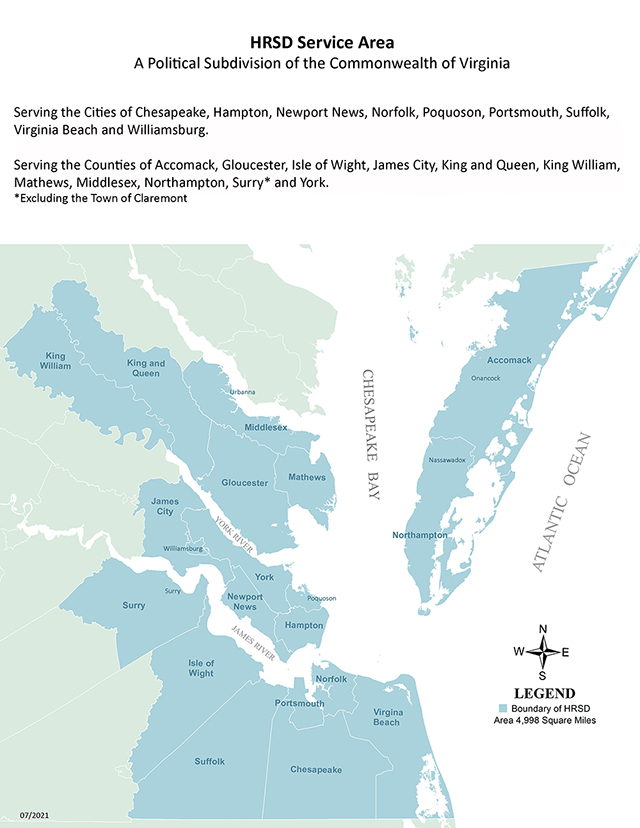
Currently, this BMP is in effect in the HRSD Small Communities service area which include Mathews, Middlesex, King and Queen, King William, Urbanna, parts of Eastern Shore and Surry* (*excluding the town of Claremont).
See FAQ's below for more information.
-
FOG stands for Fats, Oils, and Grease which is any combination of animal fats and vegetable oils used to prepare food or are naturally found in food.
Sources of FOG include food scraps, dressings, meat fats, dairy products, icing, cooking oils, sauces, batters, butter, soups and other foods high in fat.
FOG blockages in the sewer is one of the leading causes of Sanitary Sewer Overflows (SSOs). This is when raw sewage overflows out of the sewer system.
SSOs create a significant public health hazard and are prohibited under the Federal Clean Water Act. SSOs can harm human health, degrade water quality, and impair ecosystems.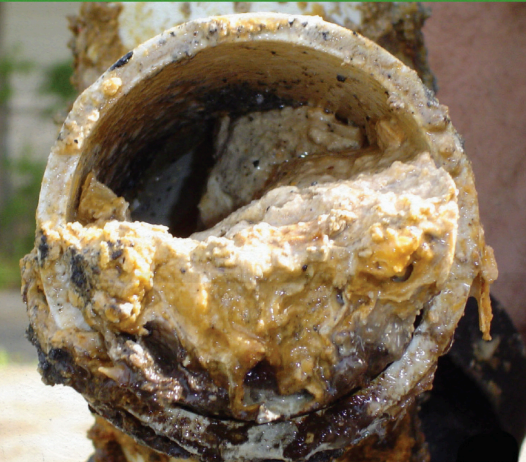
With the use of kitchen best practices and installation of adequately sized and maintained Grease Control Devices (GCDs), FOG can be nearly eliminated from the sanitary sewer system and SSO occurrences mitigated. This effort needs your careful attention and ensures this FOG Program is effective, and our sewer system, human health and environment is protected.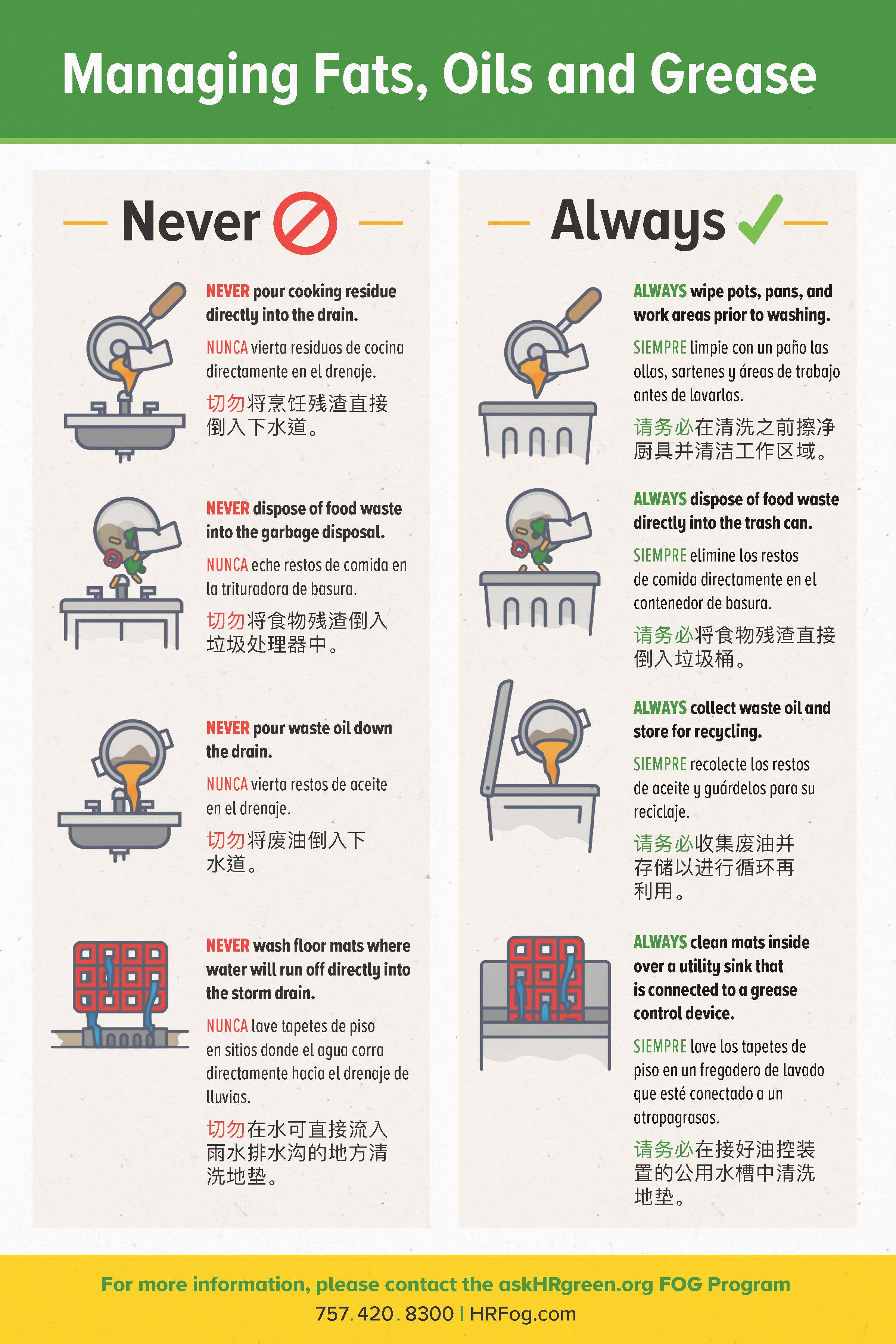
-
A GCD is a device used to collect, contain, and remove food waste, including FOG, from wastewater while allowing remaining wastewater to be discharged to the sanitary sewer system by gravity.
Approved Grease Control Devices
(Plastic) Hydromechanical Grease Interceptor (HGI)
- (Plastic) Hydromechanical Grease Interceptor (HGI)
- Made from high grade durable plastic, which can withstand a pH of 3,
- Come in a variety of sizes and can be installed inside or outside.
- Tested and rated to retain over 90% FOG, allowing less frequent cleaning.
Other Types of Grease Control Devices
(Metal) Hydromechanical Grease Control Device (HGI)
- Traditionally made of acid-resistant enamel or epoxy-coated metal
- Located inside and are typically connected to the 3-compartment sink.
- New installations are not generally approved, due to low FOG capacity and degradation.
- Gravity Grease Control Device (GGI)
- Traditionally made from concrete
- Located outside and range in size from 250 gallons – 2,000 gallons
- New installations are generally not approved, due to no data to support FOG capacity.
- Automatic Grease Control Device (AGCD)
- Traditionally made from metal
- Located inside and are typically connected to the 3-compartment sink. Must be plugged into an electrical source.
- New installations are not generally approved, due to increased cleaning requirements.
-
Before purchasing and installing a GCD, the proposal must be submitted to HRSD for review and approval. This ensures the chosen GCD meets the standards and is sized based on your individual facility needs.
- Review the Hampton Roads Regional Technical Standards for GCDs and submit the HGI Sizing and Selection Form – A to aalbright@hrsd.com.
-
- Brown Grease
- Floatable fats, oils, grease and settled solids produced during food preparation that are recovered from grease control devices.
- Yellow Grease
- Kitchen cooking oil used in food preparation that has not been in contact or contaminated with other sources such as water, wastewater or solid waste. An example of yellow grease is fryer oil, which can be recycled into products such as animal feed, cosmetics and alternative fuel.
- Yellow grease is required to be disposed of in a Renderable Yellow Grease Container, leak-proof container used for the collection and storage of yellow grease only.
- Maintained Renderable Yellow Grease Container
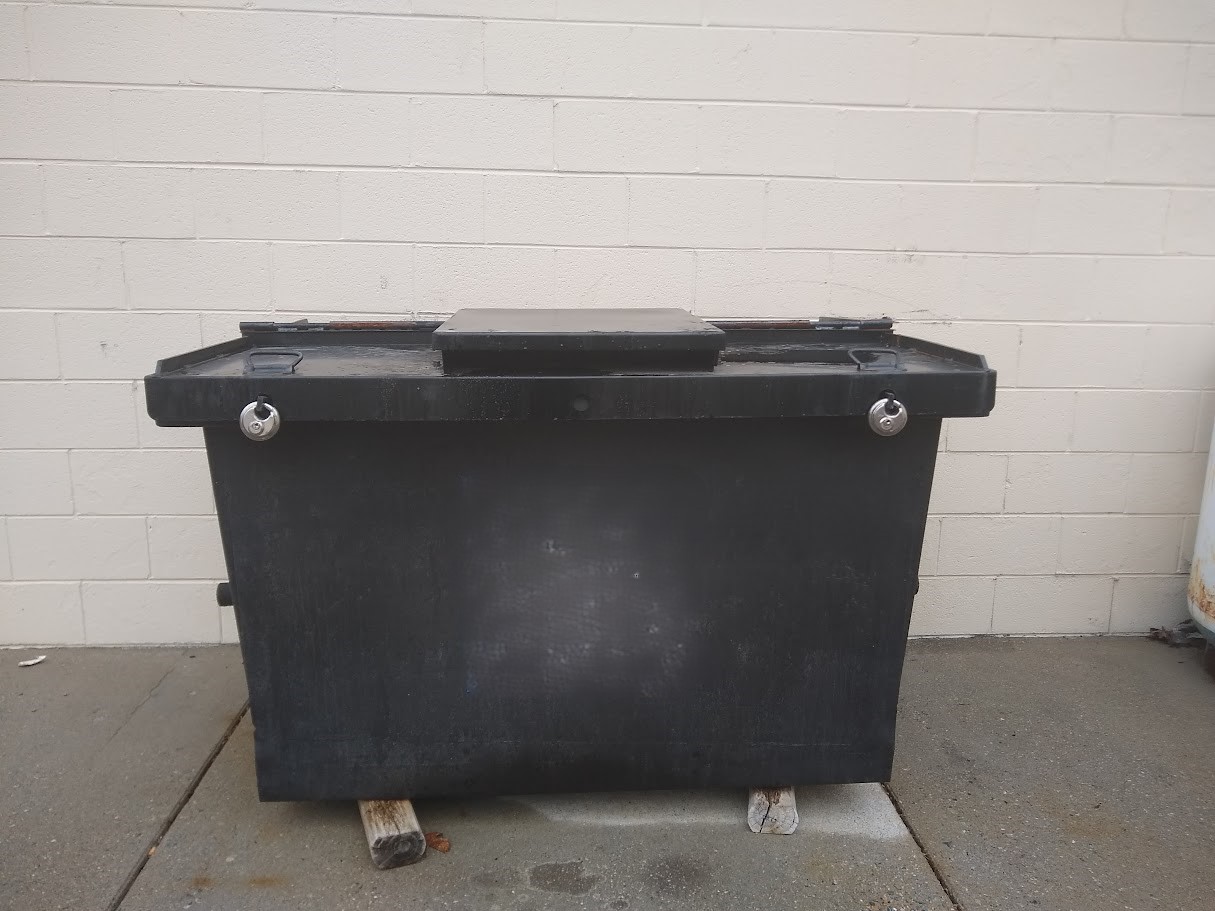
- Failed Renderable Yellow Grease Container
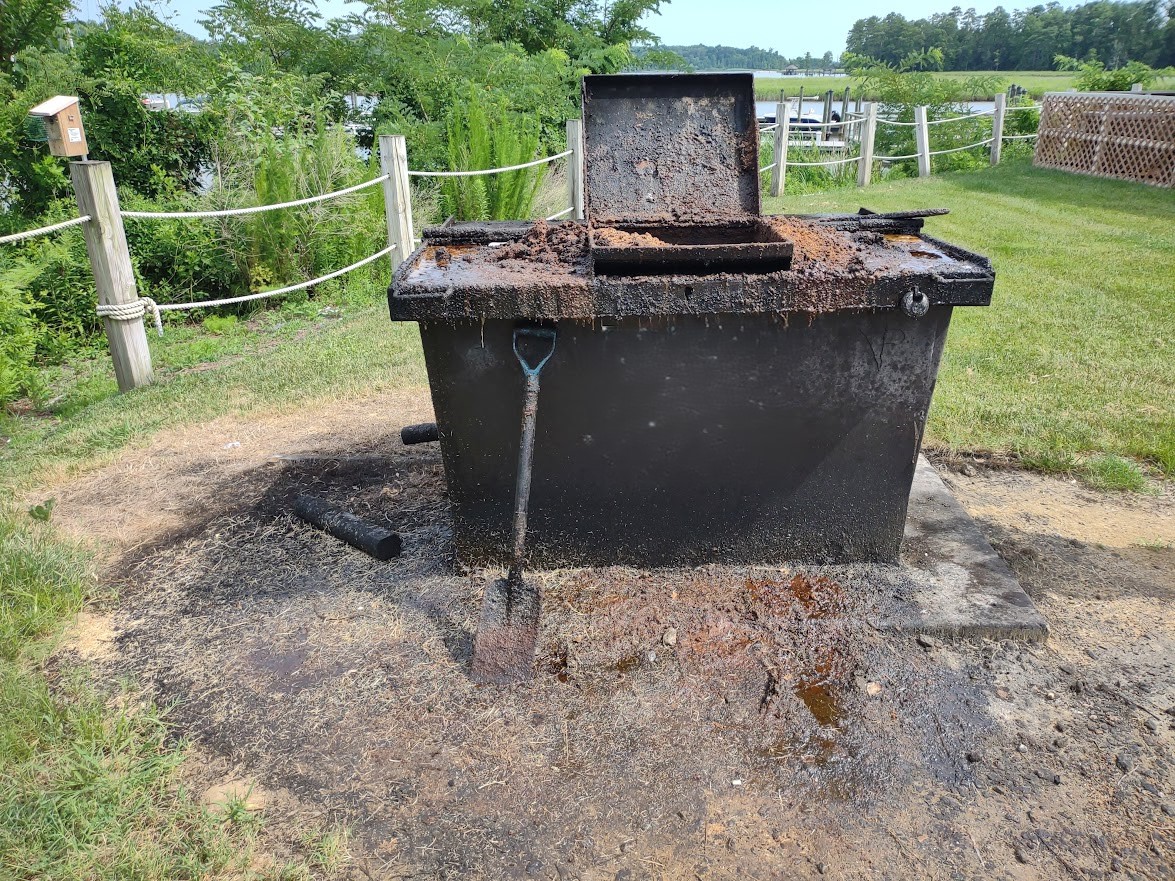
- Brown Grease
-
- All FSEs must have at least two current employees complete the FSE Employee Regional FOG Training Certification Program at www.hrfog.com.
- If you have issues with the site or need to reset your account, please contact fogsupport@hrpdcva.gov.
-
- FSEs are required to use a grease hauler that disposes of the waste at an appropriate disposal location and has completed the Hauler Regional FOG Training Certification Program.
- Grease Haulers holding an HRSD discharge permit are required to take this certification. A list of HRSD Permitted Grease Haulers is available HERE.
- Using a different grease hauler?
- It is the responsibility of the FSE to ensure they are using a certified grease hauler. You may send the letter below to the hauler of your choice so that they may complete the certification.
- Grease Hauler Letter (pdf)
-
- The HRSD high strength waste surcharge categories are based on North American Industry Classification System (NAICS) industry groupings. A surcharge is applied to all facilities within designated categories. More information can be found at https://www.hrsd.com/surcharge.
-
- Your GCD cleaning frequency is based on your average numbers of meals served per day, your menu type and the capacity of your GCD. If you feel you can go longer between cleanings, submit a completed GCD Cleaning Frequency Variance Form and supporting documentation to aalbright@hrsd.com.
- GCD Cleaning Frequency Variance Form (pdf)
-
- Self-cleaning by the owner and/or operator of an establishment is not allowed unless approved by the sanitary sewer system owner. Only hydromechanical grease interceptors (HGIs) with a liquid volume of 25 gpm / 50 pounds or less may be considered for self-cleaning. Submit the completed FSE Employee Cleaning Request Form and supporting documents to aalbright@hrsd.com.
- FSE Employee Cleaning Request Form – C (pdf)
-
The Pretreatment and Pollution Prevention (P3) Department monitors wastewater conveyed to treatment plants and implements its Industrial Wastewater Discharge Regulations and Enforcement Response Plan to protect interceptor systems, treatment plant staff, facilities and processes.
Violation of the Regulations and/or FOG BMP result in enforcement actions. These are emailed and mailed to the certified mailing contact on file. It is important to be aware of required deadlines. Please, keep in contact with your inspector.
-
HRSD must be immediately notified of any spill or overflow, at https://www.hrsd.com/report-a-spill.
-
All development projects within HRSD's Small Communities service area need to adhere to the HRSD Standards and Small Communities Sanitary Sewer Design Guidelines below.
Please visit https://www.hrsd.com/project-requests-small-communities for more information.
-
If you are in the metro area of Hampton Roads, and are directly connected to HRSD infrastructure, you may be issued an HRSD FOG BMP.
If you are in the metro area and are connected to locality sewer, you are under the jurisdiction of that locality’s FOG Sewer Use Ordinance. Visit https://hrfog-hrpdc.talentlms.com/contact for information about the other Local FOG Programs in Hampton Roads.
-
HRSD is expanding its oversight to parts of the Eastern Shore. Over the next several months, site inspections of all FSEs that are connected to HRSD’s infrastructure will be conducted. Full compliance with the BMP will be required after a 12-month introductory period.
At this time, completing the online survey will assist HRSD with individualizing the site inspection based on the unique needs of each facility.