
Written by Brantley Bissette, HRSD Community Education and Outreach Specialist Published on July 1, 2026
Oysters are central to HRSD's story. In fact, the utility was established in 1940 in direct response to wastewater pollution that contaminated local oyster reefs and created public health concerns for people consuming the shellfish. For decades afterward, HRSD proudly featured its original oyster shell logo on shirts, facility signs, trucks, and hard hats.
More recently, HRSD has partnered with the Chesapeake Bay Foundation (CBF) to raise oyster spat before releasing them into local waterways. Since 2011, HRSD has released nearly 8,000 oysters grown at the Boat Harbor Treatment Plant at the mouth of the James River in Newport News.
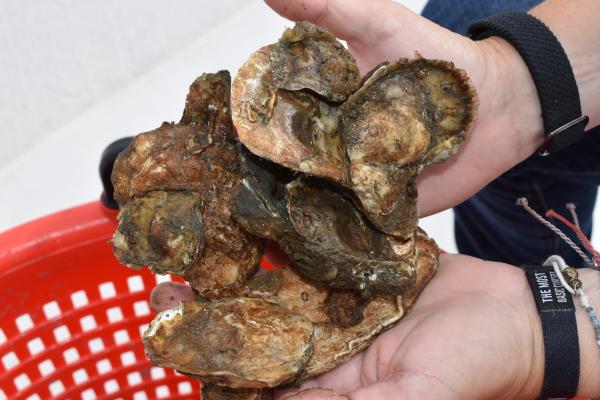
According to CBF, oysters reach maturity after about one year. Once mature, a single oyster can filter up to 50 gallons of water each day and may live for as long as 20 years. Collectively, HRSD-raised oysters have the potential to filter more than 140 million gallons of water each year in the Chesapeake Bay.
While the water HRSD returns to the Chesapeake Bay watershed already meets rigorous water quality standards, these oysters provide an added environmental benefit by naturally filtering the water and supporting healthier waterways for wildlife and the communities of Hampton Roads.
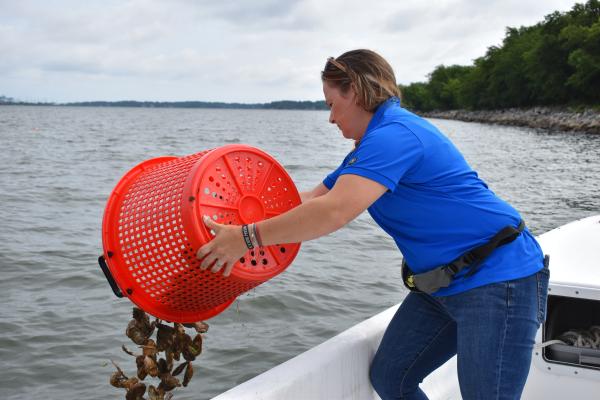
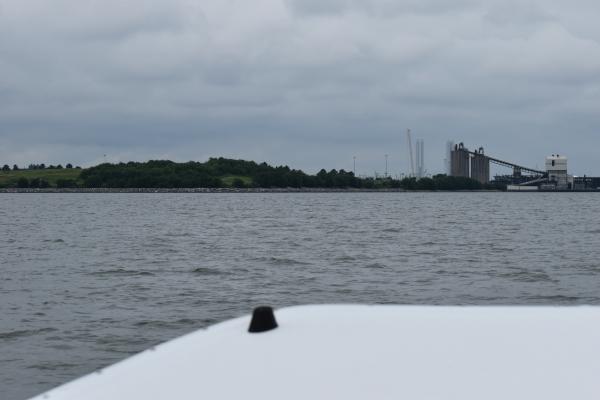
On Monday, HRSD staff released the final 500 oysters raised at the soon-to-be-decommissioned Boat Harbor Treatment Plant. They were placed on HRSD's own oyster reef just offshore of the Virginia Initiative Plant along the Elizabeth River in Norfolk. Located within one of the river's more heavily industrialized stretches, the reef will continue supporting the long-term health of this important waterway.
More than 85 years after oysters helped inspire HRSD's creation, they remain a symbol of our commitment to protecting public health and preserving the waterways that define our region. Whether through advanced wastewater treatment or partnerships that restore natural ecosystems, every effort brings us closer to a healthier Chesapeake Bay for generations to come.